Anyone can follow a cricket match after about ten minutes of explanation. These are the ten minutes.
01
The field and the pitch
Two teams of eleven. One side bats while the other bowls and fields, and then the sides swap. The batters score runs; the fielding side is trying to get them out. Whoever has more runs at the end has won.
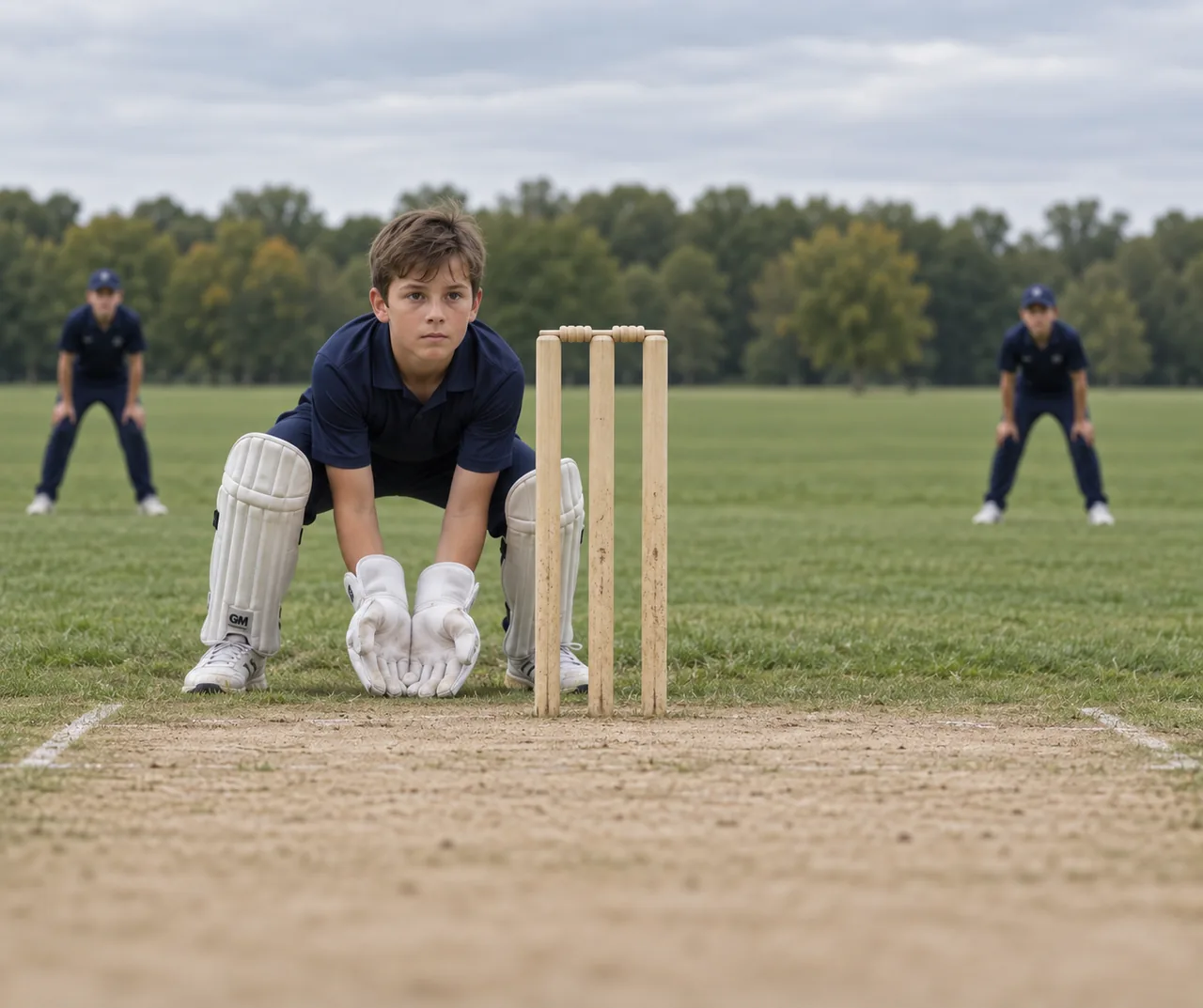
The pitchA strip of rolled earth twenty-two yards long, in the middle of the ground. The only part with a fixed size.
The stumpsThree wooden posts at each end of the pitch. Knock them over and the batter is out.
The boundaryThe edge of the ground. No prescribed shape or dimensions — which is why no two cricket fields look alike.
02
Batting
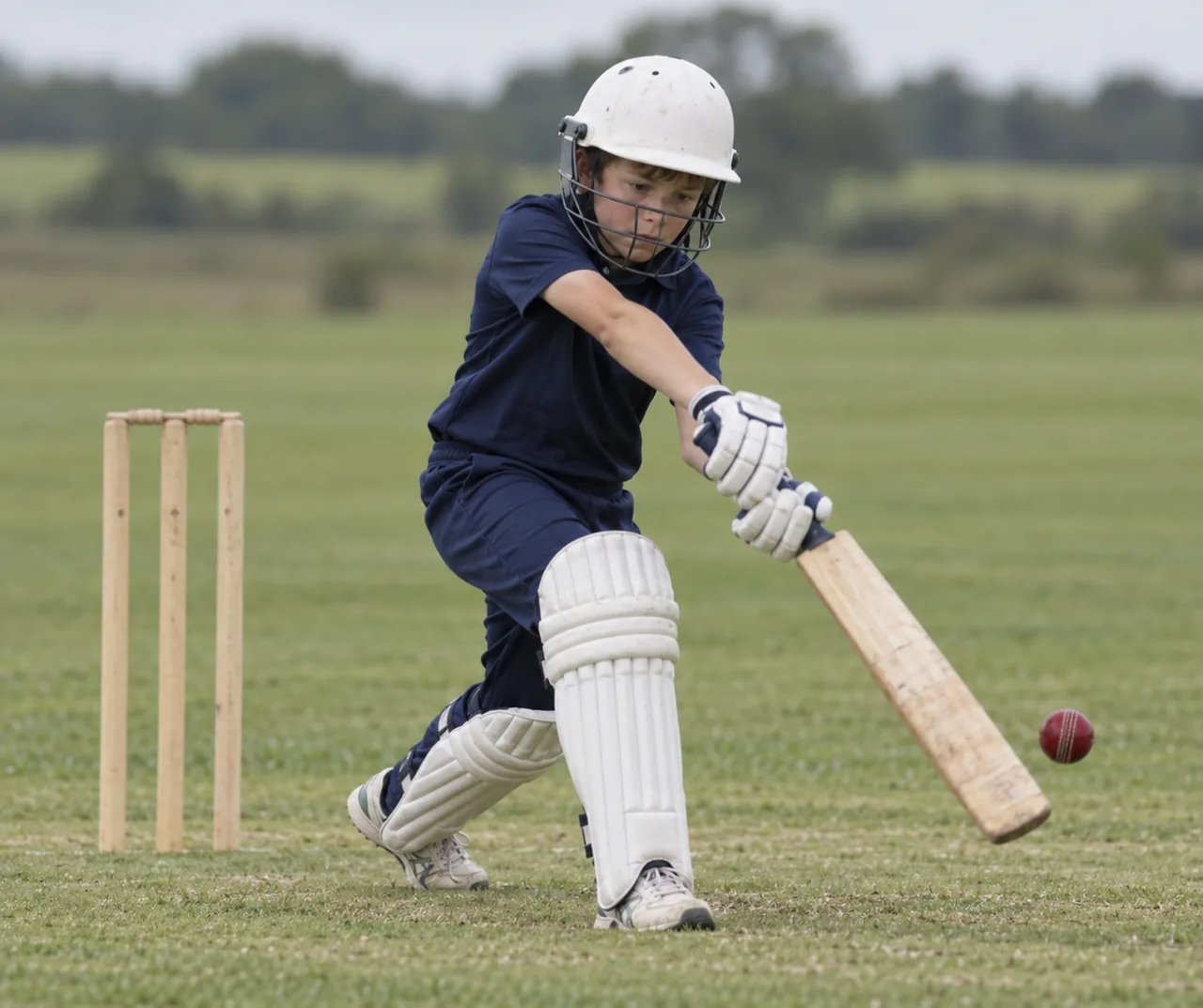
Two batters are in at once, one at each end of the pitch. The one facing plays the ball; the other backs up, ready to run. Batters can stay in for a long time, which is part of why the game rewards patience over speed.
The batA flat willow blade with a straight face and a cane handle. Nothing about it is round.
A runScored by the two batters running past each other between the wickets — or by hitting the ball to the boundary.
OutBowled, caught, or run out, among other ways. An innings ends when ten of the eleven are out.
03
Bowling
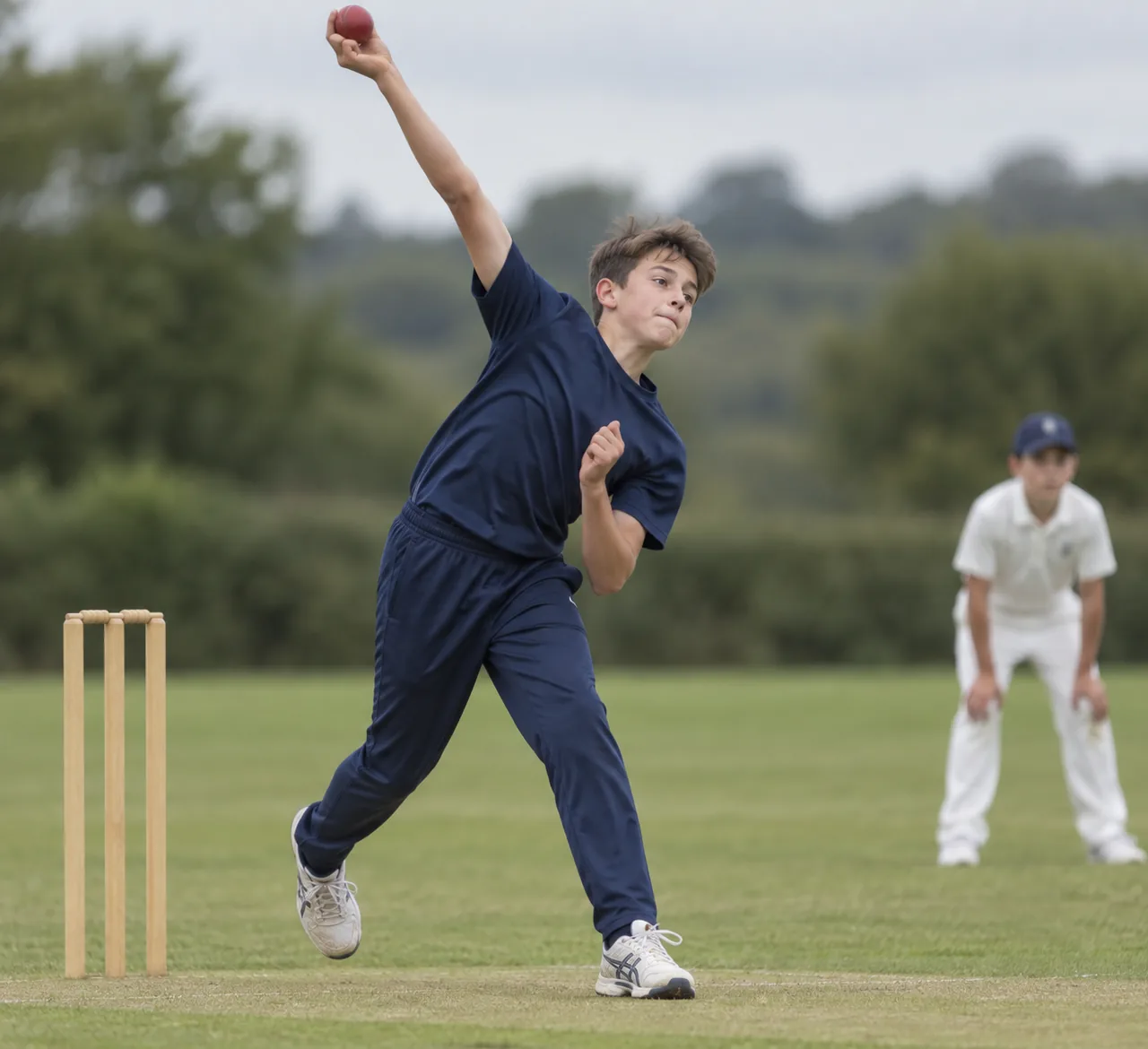
The bowling arm has to come over straight — it cannot be thrown. The ball is usually bounced once on the pitch before it reaches the batter, and what it does off that bounce is most of the contest.
Longer formats exist and run over several days, which is where cricket gets its reputation for length. Junior matches are shorter again.
An overSix deliveries from one end. Then the bowling switches to the other end and a different bowler takes over.
Twenty20Twenty overs a side, about three to three and a half hours. The format most junior cricket uses.
Pace and spinTwo ways to bowl. Spin rewards a child who thinks about the batter rather than one who can throw hard.
04
What a beginner brings
Cricket looks expensive from outside because of the gear. It is not, at the point a child turns up for the first time: almost none of it is theirs to provide.
To bringClothes to run in. That is the whole list.
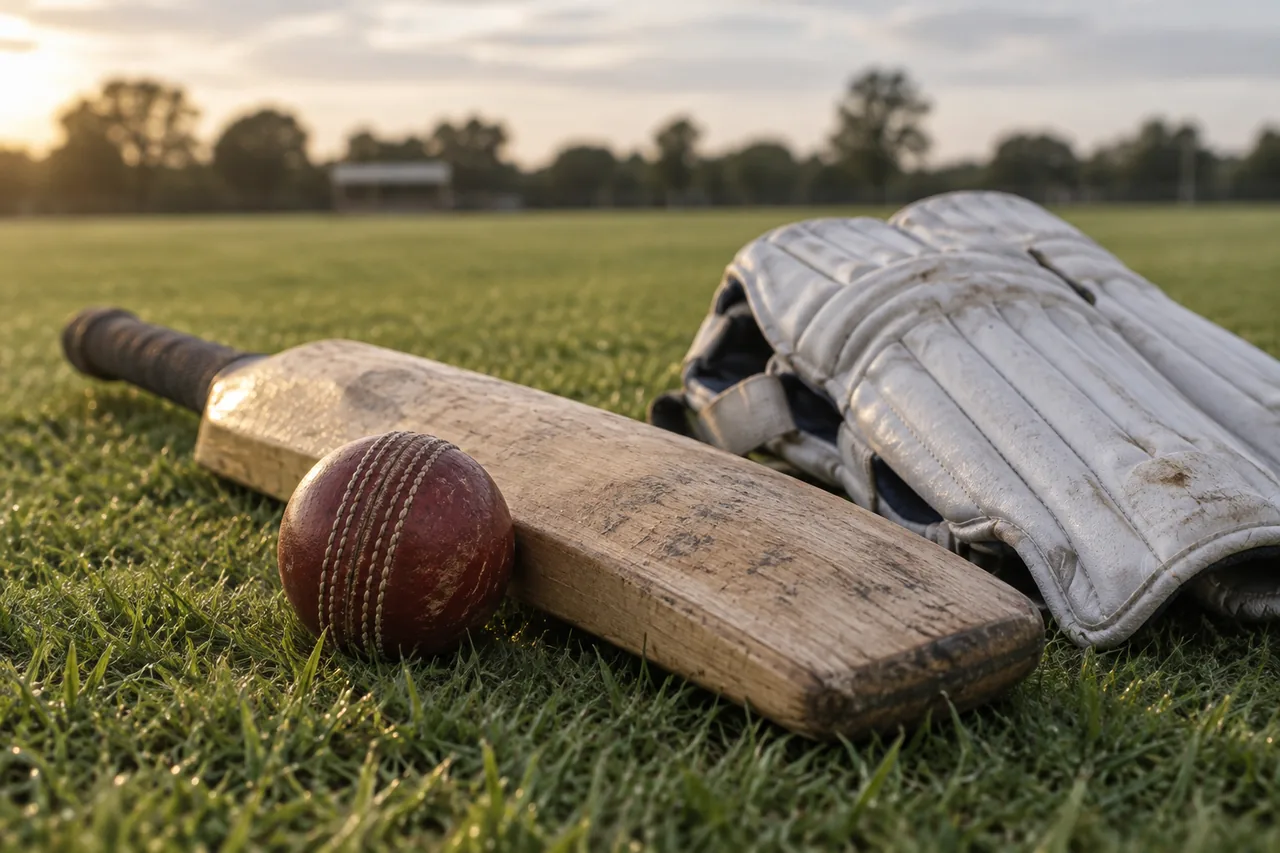
Shared kitBat, pads, gloves and helmet are shared equipment in junior cricket, not something a family buys first.
The ballLeather, with a raised stitched seam. Junior sides often use a softer one to start.
05
Pick a positionEvery place on the field has a name and a job. Choose one to see what it does.
Where everyone stands
The fielding side arranges itself around the batter according to where the ball is likely to go, and every place on the field has a name. Learning six or seven of them is the quickest way into a match.
Choose a position on the diagram and it will say what that place is for. A right-handed batter is at the far end; the whole arrangement mirrors when a left-hander comes in, which is why fielding sides move between deliveries.
The sport in the United States
USA Cricket governs cricket in this country and has been an associate member of the International Cricket Council since January 2019. Two sanctioned competitions sit under it: Minor League Cricket, which began play in 2021, and Major League Cricket, which played its first season in 2023.